
Case study · Personalization & matching
Turning "where should we eat" into a social network
A cross-platform app that matches people over shared meals — built to remove the decision paralysis and social anxiety that keep people eating alone.
THE CLIENT
Genuine connection is getting harder to come by
Lunchbuddy set out to fix a problem most food and social apps ignore: it's not the food that's hard to find, it's the people to share it with. In a market full of food-delivery and restaurant-discovery apps, none of them actually solved for eating together.
The challenge: dining alone in a connected world
Genuine social connection over food had quietly become rare, for reasons that had nothing to do with food itself.
- •Social isolation: a large share of adults report feeling lonely at mealtimes, even in dense cities.
- •Decision paralysis: the friction isn't finding a restaurant, it's deciding where to go and who to go with.
- •Social anxiety: the fear of an awkward first meeting keeps people from reaching out at all.
- •Narrow social circles: most people's dining companions are limited to an existing friend group, with no easy way to expand it.
- •Limited cross-cultural exchange: few products are built to connect people across cuisines and backgrounds around a shared table.
The solution: dining as the social catalyst
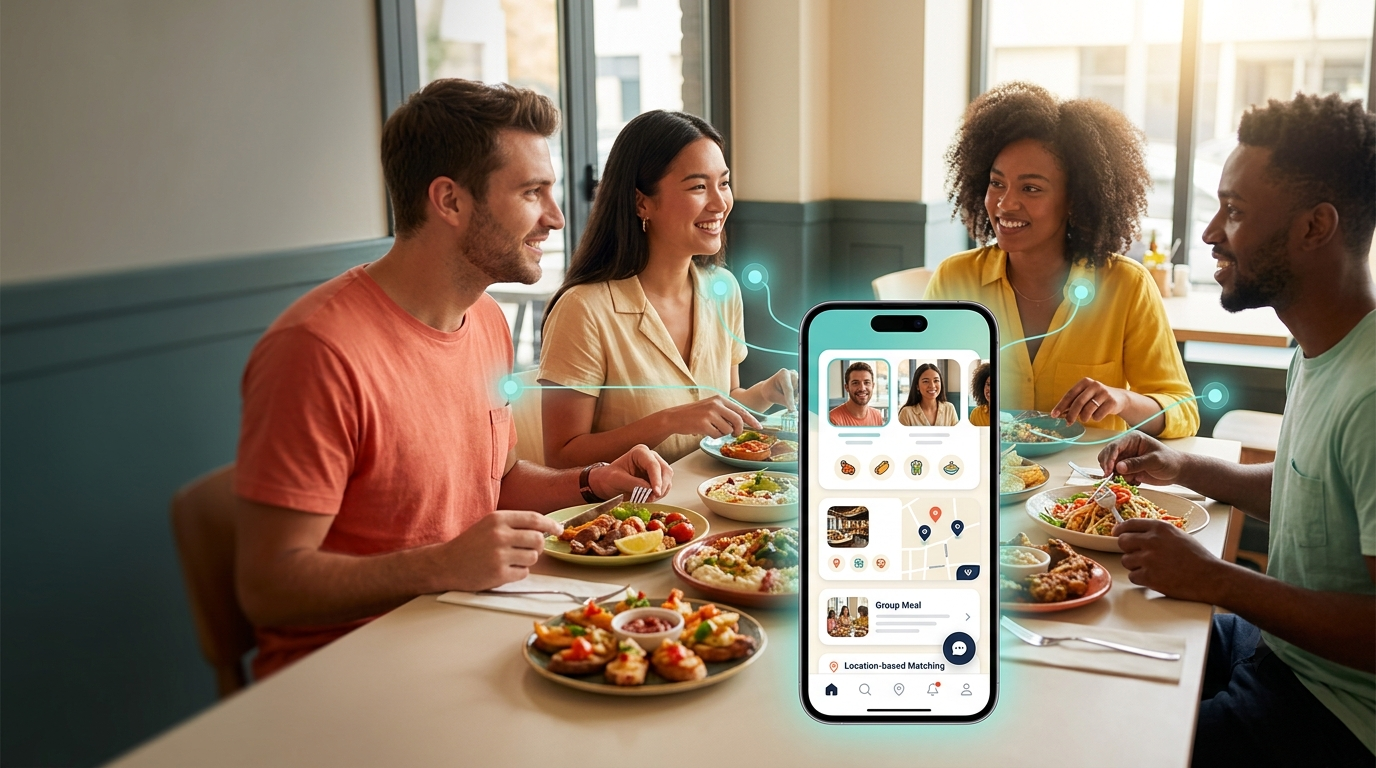
Lunchbuddy reimagines dining as the reason people connect, not an afterthought to it — an all-in-one platform that removes the guesswork and the anxiety of meeting new people over food.
Intelligent matching
Pairs users by dietary preference, cuisine interest, and location, with cultural-compatibility scoring to encourage diverse connections and a safety-verification layer to keep it trustworthy.
Restaurant discovery
A trending-restaurants feed, event-based group dining, cuisine-specific matching, and location-aware recommendations for a convenient meetup.
A food-blogging community
Instagram-style food blogging, restaurant reviews, and a follower system that lets food-focused users build an audience inside the app.
Low-friction onboarding
Quick profile setup, real-time messaging to coordinate before meeting, and public-meeting safety features built into the flow, not bolted on.
Built for real-time, cross-platform from day one
Lunchbuddy shipped as a genuinely cross-platform product — a Spring Boot backend behind an Angular web app and a React Native mobile app — over an eight-month build from concept to launch. Two technical problems shaped the architecture more than any other:
Real-time matching at scale. Matching users on multiple criteria while staying fast meant a machine-learning-based recommendation engine backed by Redis caching for user preferences, geospatial indexing for location-based matches, and a fallback matching path for edge cases.
One experience, two platforms. A shared API layer with platform-specific optimizations kept the web and mobile experience consistent, using React Native for iOS/Android code reuse and a mobile-first Angular build for the web app, synchronized in real time.
A microservices architecture with horizontal scaling, PostgreSQL read replicas, and automated monitoring means Lunchbuddy can absorb rapid user growth and concurrent usage spikes without a re-platform.
STACK
Technology
Have a problem like this?
Bring it to a 30-minute discovery call. We’ll tell you honestly what AI can do about it.
Book an AI discovery call